
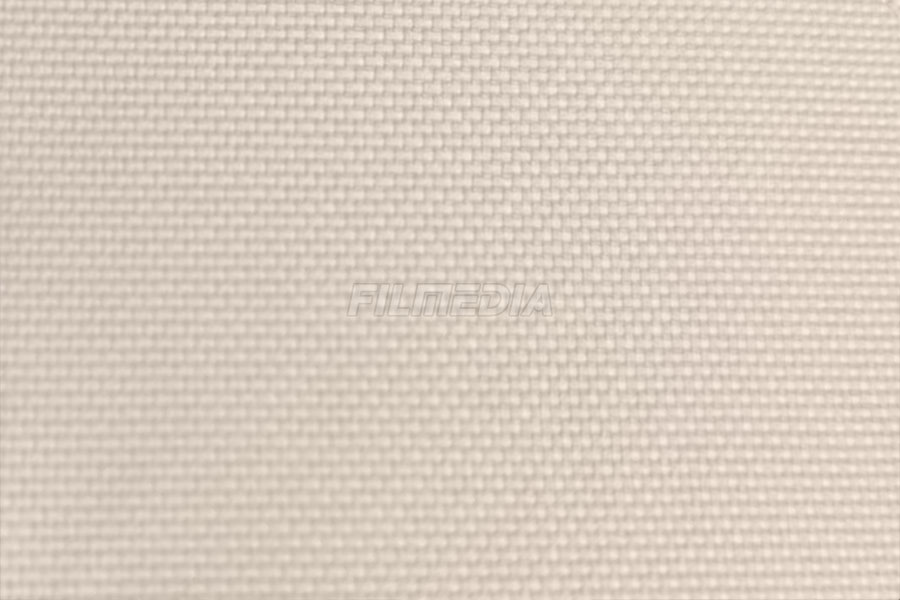
ePTFE membrane is a new type of high-performance architectural fabric. It is a premium architectural membrane material combining high strength, high light transmission, and excellent flexibility, making it suitable for movable membrane structures such as large-scale umbrella canopies and retractable roofs.
Description
Product Advantages
ePTFE membrane exhibits exceptional UV resistance and chemical inertness, effectively withstanding ultraviolet radiation. Architectural structures utilizing PTFE/ePTFE membranes demonstrate a long service life, even in the extreme desert climate of Saudi Arabia.
ePTFE membrane is pliable and withstands repeated folding and unfolding without cracking or losing strength. In architectural applications, it is ideal for scenarios requiring high flexibility—such as umbrellas that open and close frequently—without compromising durability. This characteristic makes ePTFE membrane an ideal material for dynamic membrane structures like retractable umbrella canopies and convertible roofs.
ePTFE membrane offers high light transmission while effectively blocking UV rays. In the Prophet’s Mosque Plaza project in Medina, Saudi Arabia, PTFE membrane blocked 90% of solar radiation, reducing the temperature beneath the umbrellas by 15–20°C. Its high light transmission also creates soft, natural lighting effects, fostering a unique spatial atmosphere.
ePTFE membrane possesses excellent tensile strength while being lightweight, significantly reducing the load on supporting structures.
ePTFE membrane is a non-combustible material with excellent fire and rain resistance properties.
Technical Specification Sheet
| Product No | ES-PTFE350D | |
| Material | PTFE | |
| Yarn Type | 350D | |
| Count ends/inch | 195 x 190 | |
| Weight (g/m2) | 750 | |
| Thickness (mm) | 0.46 | |
| Air permeability (L/m2/s@200 Pa) | 70 | |
| Tensile strength N/2.5×20cm | warp | 2720 |
| weft | 2660 | |
| Roll width | Customizable | |
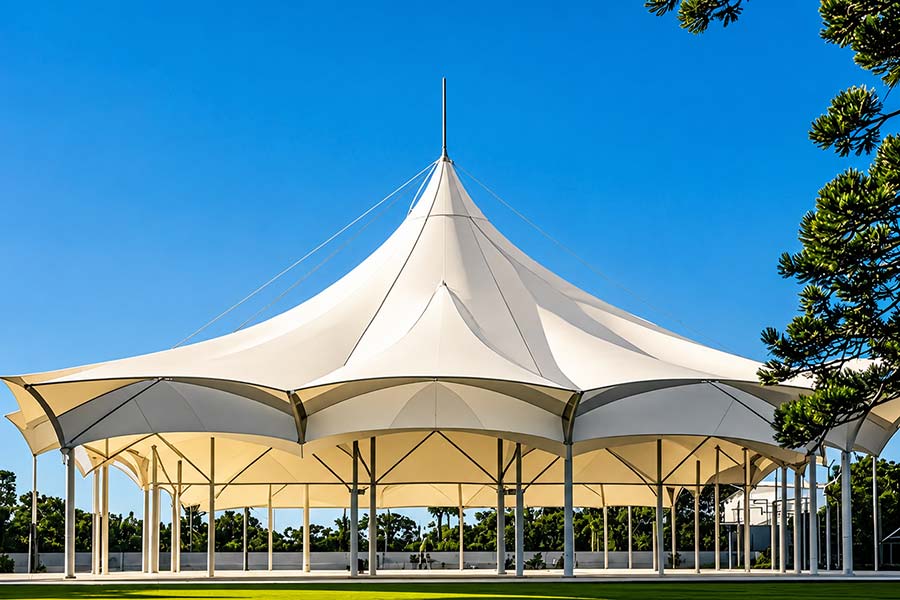
Application in Building Structures
PTFE tensile membrane materials are typically combined with steel, aluminum alloy, or cable structures to form stable, spatially curved surfaces through pre-tensioning. Due to their lightweight nature, these materials enable architectural designs featuring long spans and minimal supports, while also allowing for the creation of diverse forms such as umbrella, conical, and domed shapes, as well as free-form surfaces.